
Home Park and why nature is so important
Isn’t a walk out in nature always nice? Absolutely, but did you know that spending time in green space or bringing nature into your everyday life can benefit your mental health and physical wellbeing (Mind).
That’s why Refugee Action Kingston, encourages and helps people get out and about, especially within the (surprisingly) naturally dense environment of London’s parks.
On July 2nd, we were invited by the friends of Bushy and Home Park to join them on a guided walk of Home Park. It was a wonderful opportunity to go out, learn, and even relax!
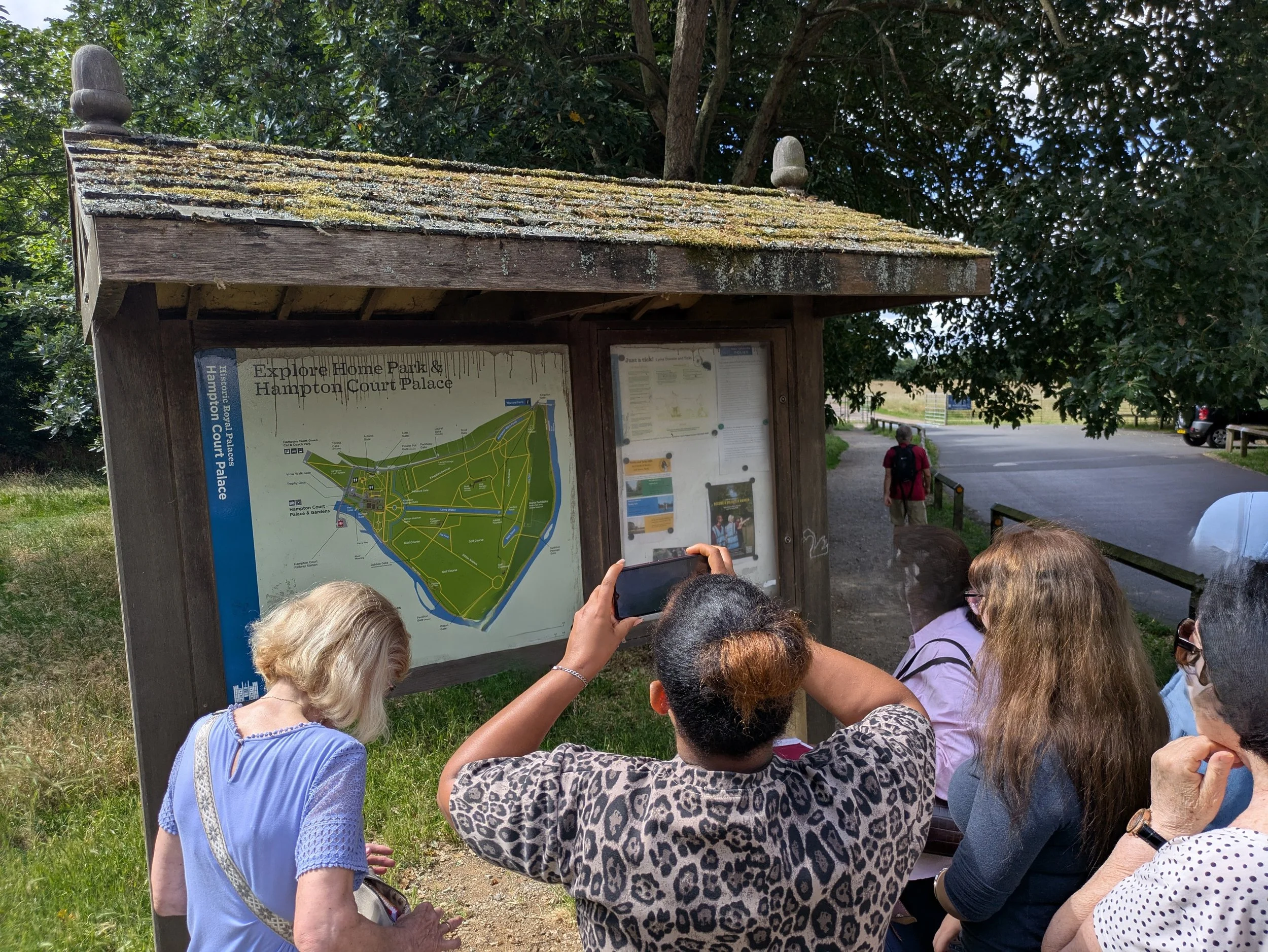
Home Park guided walk July 2026
I didn’t even know that Hampton Court was so near Kingston, and was amazed to learn some of the fun facts that the guides had to share with us. It made it all the more exciting and heartwarming to do.
I, like many of the others who joined the walk, had never been to Home Park before, and didn’t know a thing about it. But, knowing that most others felt the same way was comforting, and we consequently learned more, and had even more fun together.
The natural aspect was by far the best part of the walk. It is hard not to enjoy yourself, or feel relaxed when you’re surrounded by lush greenery, and all sorts of wildlife that you wouldn’t even know existed!
We saw “Eggs and Bacon” flowers, thistles, which we learned that the butterflies love to feast on, lime trees, often used in perfumery, and willow trees (my personal favourites), which I learned make aspirin!
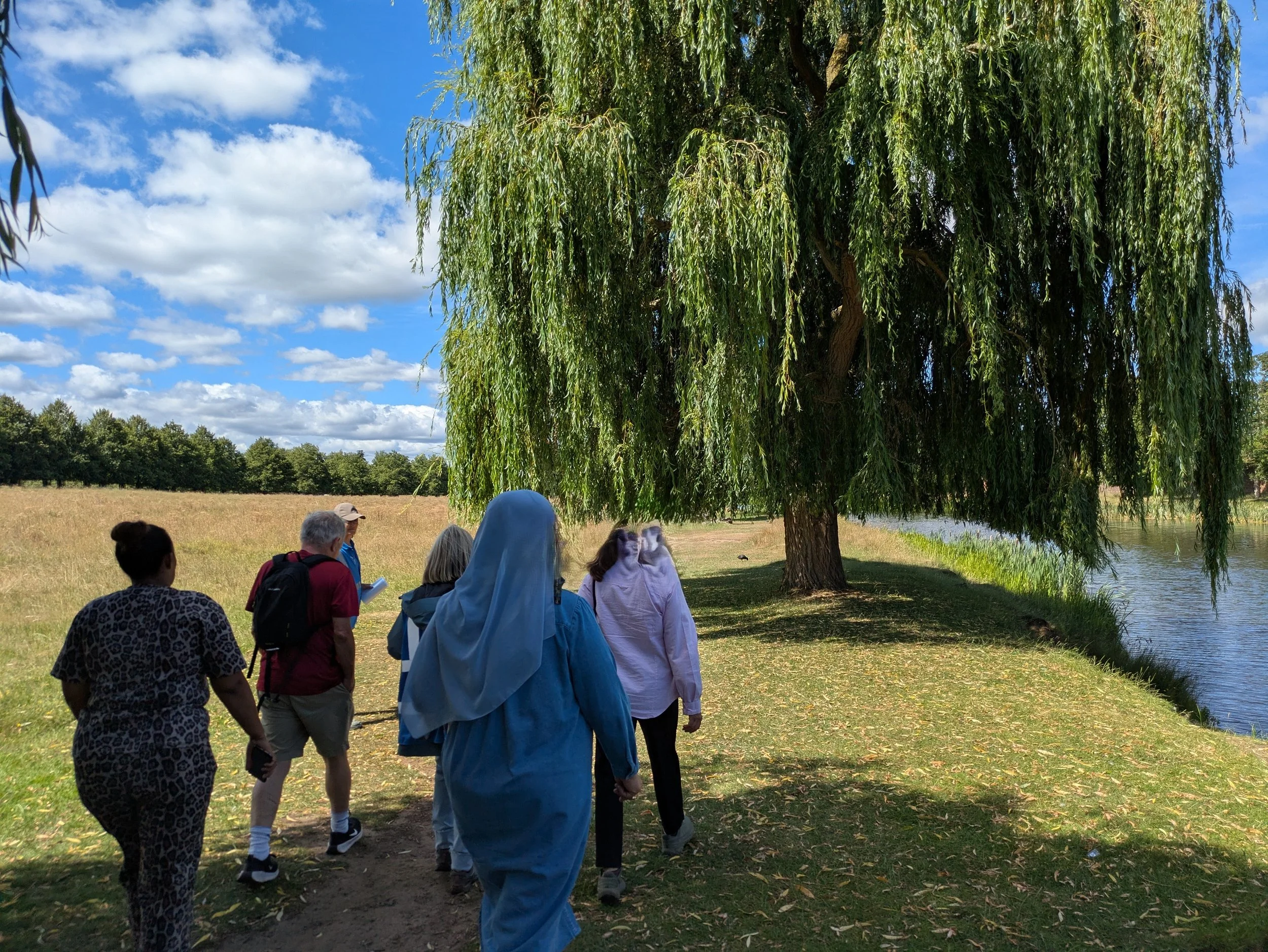
Willow trees in Home Park
The greenery itself had an immediately calming effect- green, in fact, is a calming colour, due to it being in the middle of the colour spectrum, making it easier for our eyes to process. Surrounded by that bright colour felt amazing, and the sun beaming down on us felt lovely, too, alongside the breeze.
We learned about the fauna, too. Home park is home to many fallow deer, which have ties to the deer which King Henry VIII owned in the 16th century. At the moment, it is birthing season, so the deer are extra sensitive, but they tend to stay further away from humans in general.
We saw, and learned about the many different anthills around the park - separate ecosystems of ants, with each hill governed by one queen, whose only job is to eat, and reproduce. The guides told us that some of these could be around 100 years old, which is amazing to think about!
We saw a lot of different kinds of butterflies, all equally beautiful, and dragonflies, which actually have been around since prehistoric times!
There were plenty of stinging nettles, as well. And interestingly, these plants, which are usually avoided by people, are favoured by the beautiful fallow deer for eating, and hiding their young!
The guides were amazingly informative about the history of the grounds, as well. We learned that the small cottage near the front, which was used to hold ice for the palace. The 9 metre deep hole would be packed tight with ice in the winter, from the pond, and would keep frozen for up to 18 months!
We learned about when the grounds were opened up to the public, and the role that the palace and the gardens had for each monarch.
I, alongside everyone else who came on the walk, thoroughly enjoyed myself.
Jenna who was also on work experience with me summed it up perfectly. “It was definitely a therapeutic, educational and relaxing experience - Bushy Park held an abundance of rich history and information about wildlife, ecosystems and greenery delivered by wonderful nature specialists.”
We don’t take nearly enough time to go out, and explore, especially within nature. We are quite lucky that we live in London, with its amazing royal parks, but these calming green spaces are often taken for granted.
It is our job to appreciate them, learn about them, and take care of them, just like how they help us to take care of our mental health, and well being.
This blog was contributed by Mara who joined the walk whilst with us as part of a week’s work experience.